

Summer on the water hits differently in eastern Idaho. Whether you’re out on Ririe Reservoir, American Falls, or Island Park, good music makes every trip better. A proper boat audio system setup transforms your boating experience from ordinary to something you look forward to all week.
Getting there takes more than grabbing a Bluetooth speaker and calling it good. Marine audio is its own world, with specific gear, specific installation challenges, and real consequences if you cut corners. Here’s what you need to know before you buy anything or book an install.
Why Marine Audio Is Different From Car Audio
This is the first thing most boat owners get wrong. They assume a car stereo system will work on the water. It won’t last.
Marine-rated components are built to survive conditions that would destroy standard car audio equipment. Salt air, UV exposure, humidity, and constant vibration all take a toll. A marine stereo system uses sealed, corrosion-resistant housing. Marine speakers use materials that won’t rust or degrade in wet environments.
Standard speaker wires corrode quickly on a boat. Marine-grade wiring uses tinned copper, which resists oxidation far longer. Every component in a proper marine setup is built with water, sun, and durability in mind.
If you want your system to last more than a season, start with gear that’s actually designed for the water.
Choosing The Right Head Unit
The head unit is the control center of your entire sound system. Everything runs through it, so choosing the right one matters.
Look for a marine-rated head unit with a waterproof or water-resistant face. Most quality units carry an IPX rating that tells you how well they handle moisture. A higher rating means better protection.
Fusion is one of the most trusted names in marine head units. Their units are built specifically for the marine environment and integrate well with NMEA 2000 networks, which lets you control audio from multiple points on the boat. Rockford Fosgate also makes excellent marine head units built for performance and durability.
Consider how you want to control the system. Remote controls and zone control features let you adjust audio from the helm or the aft cockpit without walking back and forth. If your boat has multiple seating areas, look for a head unit that supports multiple zones so everyone on board gets good sound.
Bluetooth connectivity is standard on most modern marine head units. Some also support wired connections and app control, which adds flexibility depending on how you like to operate your system.
Planning Your Speaker Layout
Speaker placement on a boat requires more thought than in a car. The open-air environment means sound disperses quickly. You need more speakers, placed strategically, to fill the space with quality audio.
Most bowrider area setups benefit from speakers mounted in the bow seating area, at the helm, and toward the rear of the boat. The goal is even coverage across the whole boat, not just one concentrated spot.
Marine speakers come in various sizes, and fitting them correctly matters. You’ll be cutting holes in fiberglass, which is permanent. Getting the size and placement right before you cut is critical. Poor placement is difficult and expensive to fix after the fact.
Rockford Fosgate and Fusion both produce marine speakers that pair well with their head units. Using components from the same brand often simplifies wiring and ensures the system is optimized to work together. That said, mixing brands is common and works fine when you know what you’re doing.
Aim for speakers that are marine certified, with UV-resistant cones and rust-proof grilles. Those details make a real difference in how long your system performs on the water.
Adding An Amplifier And Subwoofers
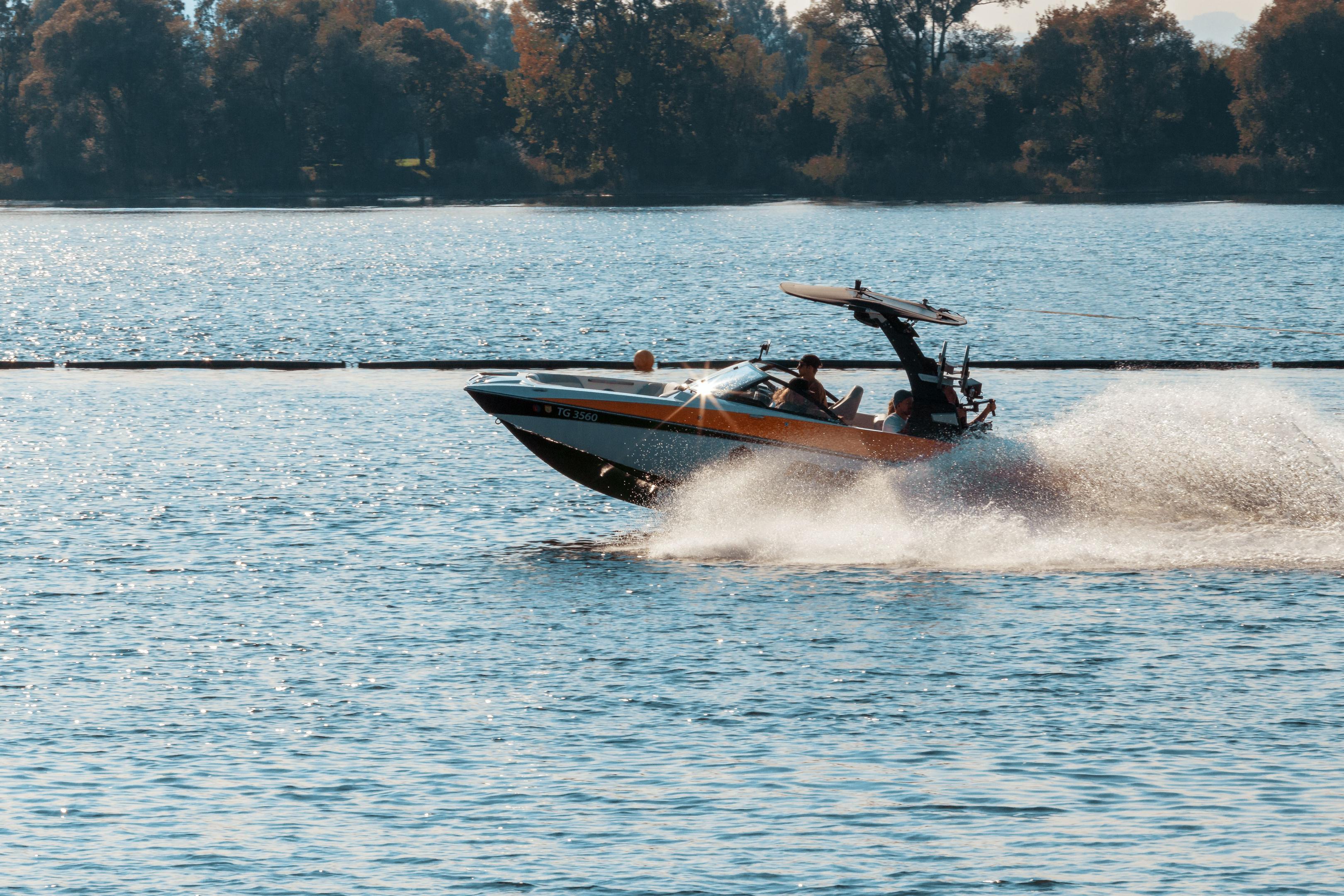
A head unit alone won’t give you the power you need on the water. Wind, engine noise, and open air all compete with your audio. An amplifier is what actually drives your speakers to the volume and clarity you want.
Match your amplifier to your speakers. Running too little power leaves your system sounding flat. Running too much power can damage your speakers. A properly sized amp running in bridged mode can maximize output while protecting your components.
Subwoofers add the low-end depth that makes music feel full and rich, not just loud. Tower boats and larger vessels especially benefit from a subwoofer setup. Smaller bowriders can still run a compact sub that fits in a storage compartment or under a seat.
Wiring an amplifier on a boat requires care. You need to run power from the battery, establish a clean ground, and route speaker wires without pinching or exposing them to sharp edges. Sloppy wiring causes problems fast. A professional marine stereo installation ensures everything is run correctly the first time.
Installation: Why It Has To Be Done Right
Marine audio installation is more involved than most people expect. You’re working with fiberglass, routing wires through tight spaces, sealing holes against water intrusion, and connecting to a boat’s electrical system.
Every hole you cut needs to be sealed properly. Water finding its way behind a speaker or into an electrical connection can cause corrosion, shorts, and component failure. The hardware you use to mount speakers and the head unit needs to be marine-grade stainless steel or equivalent. Standard hardware rusts fast in a marine environment.
Speaker wires need to be secured and protected throughout their run. Exposed wiring that rubs against fiberglass or metal edges will fail. Properly installed wiring is routed, protected, and secured the entire length of its run.
Battery connections need to be solid and properly fused. A marine amplifier draws real power, and a weak or poorly connected power source causes performance issues and potential safety concerns. Taking shortcuts here creates problems that are expensive to diagnose and fix.
A professional installation protects your investment and ensures your system performs the way it’s supposed to from day one. Contact us for installation details!
Tips Before You Buy
A few things worth knowing before you purchase any marine audio gear.
First, set a realistic budget that covers the full system, not just the speakers. Head unit, amplifier, subwoofers, wiring, hardware, and installation all add up. Buying cheap components and then spending on installation is a common mistake. Invest in quality gear upfront and the system will last for years.
Second, think about your boat style and how you use it. A ski boat with a tower needs a different setup than a pontoon or a small bowrider. The right advice comes from someone who knows marine audio and has installed systems on a wide variety of boats.
Third, buy from a shop that carries proven brands. Our brands page shows you what we carry and stand behind. We recommend what works, not just what’s in stock.
Come See Us Before The Season Gets Away From You
Summer moves fast in Idaho Falls. Boats fill up quickly on Ririe and Palisades, and install schedules fill up just as fast. If you’re planning to enhance your boat’s sound system this season, don’t wait until July to start the conversation.
We’ve been installing marine audio systems in eastern Idaho for over 30 years. We know the gear, we know the installs, and we know what works on the water. Whether you’re starting from scratch or upgrading an existing system, we’ll walk you through every option and build something that fits your boat, your budget, and the way you boat.
Stop by the shop or give us a call to get started. We’re located at 467 E. Anderson St., Idaho Falls, ID 83401. Reach us by phone at 208-524-8050, or send us a message online and we’ll get back to you. You can also browse our full services to see everything we offer before you come in.
Don’t settle for a system that can’t keep up with your summer. Call 208-524-8050 and let’s build something worth turning up.